

WE’VE BEEN QUIETLY BUILDING A SOLAR STORY
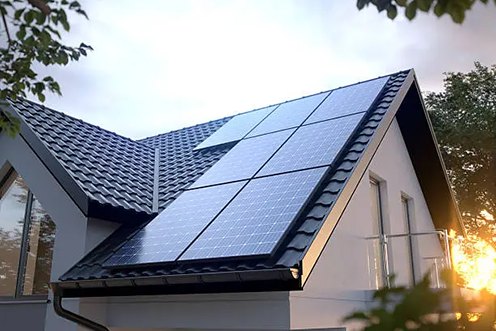
Every morning, the sun rises over Heritage Palms. For most of us, it’s simply another beautiful Florida morning. For dozens of our neighbors, however, that sunshine is doing more. It’s generating electricity, warming swimming pools, and reducing the amount of conventional energy needed to power their homes. Solar may not yet be everywhere in Heritage Palms, but it’s already become part of our community’s energy story.
• A Community with a Solar History
For the past couple of years, Heritage Palms’ leadership and the Facilities Committee have been exploring the potential for solar generation to serve our common facilities. That effort has also provided an interesting look at the solar technology already being used by homeowners throughout our community. Perhaps the most interesting discovery is simply how long solar has been part of HP.
The first solar-electric system on an HP home dates back to 2014. Since then, additional homeowners have installed solar-electric systems that generate electricity. That means some residents have been investing in residential solar for more than a decade.
FPL customers with qualifying solar systems can send excess electricity back to the utility grid. Those credits can then help offset electricity used when a home’s solar system isn’t producing enough power, such as at night or during periods of lower solar production.
Technology has changed considerably. Today’s homeowners have access to higher-efficiency solar panels, improved inverters, sophisticated monitoring systems, and battery-storage technology that weren’t nearly as common when the first systems were installed. Yet the basic idea hasn’t changed: Use Florida’s sunshine to produce useful energy.
• The Big Picture
When the numbers are viewed together, Heritage Palms has a surprisingly interesting solar story. 45 homes have some form of solar technology. Ten homes have solar-electric systems with a combined capacity of more than 184 kilowatts. The estimated potential annual electricity production from those systems is 295,000kWh with an estimated current annual retail value of that electricity at $42,000. Those numbers provide an interesting perspective on the contribution solar energy is already making within our community. Nearly 300,000 kilowatt-hours of electricity is a substantial amount of energy produced not by a power plant, but by the FL sunshine falling on Heritage Palms rooftops. That production occurs year after year.
• Solar Isn’t Just About Electricity
There is another significant part of the story. Approximately 35 additional homes have solar pool-heating systems. These systems don’t generate electricity, but instead, they use the sun’s energy directly to heat pool water. For FL homeowners, it’s a particularly straightforward use of solar energy. The sun provides the heat, and the system puts that heat directly into the pool. When the solar-electric and solar pool-heating systems are considered together, approximately 45 HP homes are making use of some form of solar technology. That is a meaningful presence for a community that has been using solar for more than a decade.
• More Than a Decade of Solar
The story began with a 20-kilowatt solar-electric system installed in 2014, and some solar pool-heating systems were being used in the community even earlier. Since then, solar technology has continued to evolve. Panels have become more efficient. Inverters have improved. Monitoring systems allow homeowners to track their production. Battery storage has become increasingly available for homeowners who want to store electricity for later use. The technology available to a homeowner today is considerably different from what was available when the first HP solar-electric system was installed. But the objective remains the same: Capture the energy of the FL sun and put it to work.
• What Does It Mean Financially?
As noted above, the estimated 295,000 kilowatt-hours of annual solar production represent approximately $42,000 in current retail electricity value each year. If annual production and electricity values remained unchanged, that would represent approximately $420,000 over ten years. The actual value to individual homeowners varies based on system size, age, location, production and the homeowner’s electric rate. The figures presented here should therefore be viewed as estimates rather than guaranteed production or savings. Nevertheless, the overall picture is compelling. HP homeowners have collectively invested in enough solar-electric capacity to produce a significant amount of electricity every year and the fuel is free.