


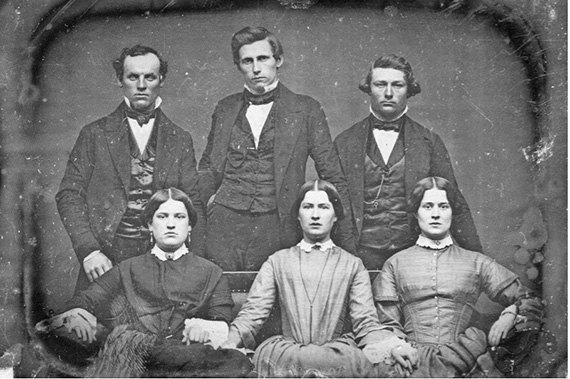
First developed in the late 1820s, photography combined art and science into one medium capable of capturing an image in the moment. The innovation transformed recorded history into something that could be documented in pictures as well as text. As the technology advanced, the medium exploded in popularity, making it possible for families to create snapshots of memories for future generations to appreciate. These early photographic portraits transport us back in time, painting a picture of a different way of life: Families were larger, clothes were bulkier, and postures were noticeably stiff and formal. But perhaps the most conspicuous difference of all is that no one ever seemed to smile.
Long Exposure Times
In the earliest days of photography, the lengthy exposure periods made it impractical to photograph people. For instance, French inventor Nicéphore Niépce’s 1826 “View from the Window at Le Gras,” credited as the oldest surviving photograph, required an exposure time of eight hours. It was more than a decade before Louis Daguerre’s 1839 invention of the daguerreotype made portrait photography practical. But even then, it was a relatively slow and meticulous process that required the subject to remain still for as long as 20 minutes!
By the early 1840s, photographic technology had advanced further, and the daguerreotype images that once required a 20-minute exposure needed only 20 seconds to process. Still, even modern photo subjects understand the difficulty of maintaining an open-mouthed smile for any amount of time. It only takes a few moments for a candid smile to turn into something more like an awkward grimace.
Additionally, until the 20th century, the expense of photographic equipment and the toxic and dangerous chemicals needed to process film meant that most photographs were taken by professional photographers working out of studios or traveling with their equipment. A photography session was a time-consuming and pricey undertaking; it cost the average person as much as three or more months’ salary, and a person might only be photographed a few times in their life. The requirement for stillness, combined with the novelty and cost of posing for a professional photographer, created an atmosphere where it was simply easier to maintain a neutral or serious expression. But even once the technology existed to capture more relaxed expressions, it was a long time before smiling in photos became the norm.
Social Etiquette Frowned Upon Smiling
Some historians believe that advancements and accessibility in dental care may have contributed to more smiles eventually being captured on film. Other experts disagree, noting that for centuries, a lack of dental care was the norm and thus wasn’t considered to detract from a person’s physical appeal. Still, smiling for a photograph wasn’t commonplace in the early days of photography. In fact, instead of the modern directive to “Say cheese!” to produce a wide, toothy grin, some photographers in Victorian-era England asked people to say “prunes,” forcing them to tighten their lips for a more socially acceptable expression based on the beauty standards and etiquette of the time.
In an era where open-mouthed grins were considered unacceptable and a smile was believed to signify someone was poor, drunk, lewd, or otherwise corrupt, it was rare for someone to choose to smile in a portrait — and even less likely that a photographer would encourage it. That all changed, however, with Kodak’s democratization of photography in the early 20th century.
The Kodak Revolution
As photography became more accessible in the late 19th century, a wider variety of people took and sat for photographs, and what was acceptable in portrait photography became less rigid. In 1888, Kodak founder George Eastman started a photographic revolution that put cameras in the hands of amateur photographers and gave them an instruction manual on how to take good photos. In 1900, the Kodak Brownie camera was marketed for children and sold for just $1, creating a photography craze that appealed to adults as well.
By the 1920s, a century after the first landscape photographs were captured on film, more relaxed postures and a greater variety of expressions, including closed – and open -mouthed smiles, were common in both amateur and professional photography. With the advent of color photography, the popularity of candid photos, and the rise of affordable personal cameras, capturing an array of expressions – including moments of genuine joy – became the gold standard. And of course, now there’s the ever-present cell phone!