


“If you can’t measure it, you can’t improve it.” — Peter Drucker
I want to thank all of you who have participated so far with the Strategic Planning member survey that was sent in late August. My challenge to all of you, was to have an 80% participation rate on the survey which I believe is achievable. Please remember that the survey is very important as it will allow every member of our Club to provide their feedback on what is important to them, and should be considered as part of the Strategic Planning Process. The survey should only take you 15 minutes or so to complete, and is well worth the effort.
Surveys have a long history as one of the most effective methods for collecting information and understanding populations. Their origins can be traced back to ancient civilizations, where rulers conducted censuses to measure population size, assess resources, and collect taxes. Over time, advances in mathematics and statistics transformed surveys from simple record-keeping tools into scientifically designed instruments capable of measuring opinions, behaviors, and trends across large groups of people with a high degree of accuracy. When designed well, surveys provide reliable insights that support strategic planning, continuous improvement, and better decision-making.
Here are some fun facts regarding surveys:
The first known census was conducted over 4,000 years ago in ancient Babylon and Egypt to track populations, resources, and taxation.
The first U.S. Census was completed in 1790. It counted nearly 3.9 million people and helped establish the foundation for collecting population data in America.
The Michelin Guide began in 1900 as a travel guide created by the Michelin Tire Company to encourage people to drive more. Its anonymous restaurant evaluations eventually became one of the world’s most influential rating systems.
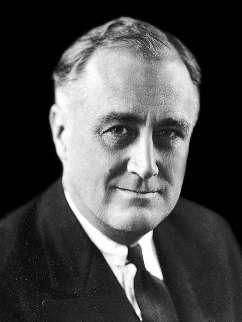
Gallup pioneered modern public opinion polling by using scientific sampling methods. Its first major national poll correctly predicted the outcome of the 1936 U.S. presidential election (it was Franklin D. Roosevelt), while many traditional newspaper polls were wrong.
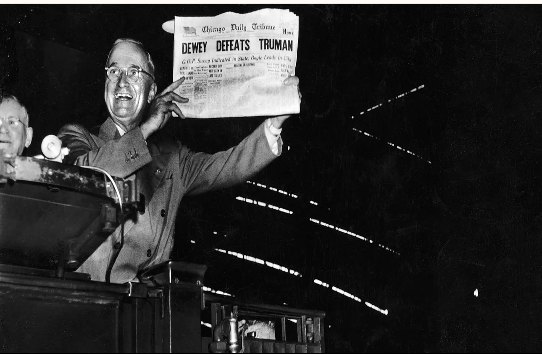
1948 U.S. presidential election changed how surveys were conducted. Many pollsters predicted Thomas Dewey would defeat Harry Truman, but the incorrect prediction highlighted the importance of using accurate sampling methods.
Enjoy the remainder of your summer as we transition into autumn this month.