



Independence Is Built, Not Given
Most people say they want to “stay independent as they age.” But independence is rarely something we suddenly gain or lose overnight. More often, it is built quietly over time through small, everyday capabilities: standing up from a chair without using your hands, catching your balance when you trip on a curb, reaching overhead without strain, or confidently navigating stairs and uneven ground.
These are the kinds of abilities we rarely think about – until they begin to feel harder. These seemingly simple actions rely on complex systems in the body, and the encouraging news is that many of them remain trainable throughout life.
For much of modern history, healthcare has focused on what happens after something goes wrong. We wait for pain, injury, illness, or decline – and then we seek treatment. When those treatments are available, they can be remarkable. Modern medicine saves lives every day.
But there is another side of the equation that is just as important: the role of everyday lifestyle in shaping our health trajectory long before a diagnosis appears.
Healthcare and lifestyle are not competing forces. They work best when they work together. Doctors, medications, and medical procedures are powerful tools for treating disease and managing complex conditions. But the foundation that determines how resilient our bodies are – how well we move, recover, adapt, and remain independent – comes largely from the choices and habits that happen outside the clinic.
In other words, much of our long-term health is shaped, not only by what happens in a hospital, but by what happens in our kitchens, living rooms, neighborhoods, and daily routines.
This is where personal agency comes into the picture.
Agency means recognizing that, while we cannot control everything about our health, we influence far more than we often realize. Our bodies constantly respond to the signals we give them: movement, nutrition, sleep, social engagement, stress management, and mental outlook.
Everyday actions send powerful biological messages.
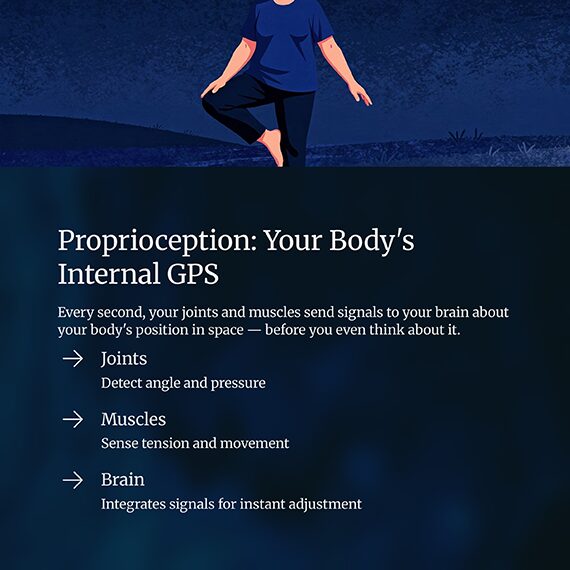
Move regularly, and the body strengthens muscle fibers, reinforces balance pathways, and sharpens the neurological circuits that keep us stable and coordinated. Challenge your balance or vary movement patterns, and the brain updates its internal maps of the body and environment. Maintain muscle and mobility, and you preserve the ability to rise from a chair, reach overhead, carry groceries, and navigate uneven ground safely.
These abilities may seem small—but they are the building blocks of independence.
Researchers often refer to this as functional capacity: the ability to handle the physical demands of everyday life without assistance. Walking confidently, climbing stairs, maintaining balance, recovering from a stumble, and moving comfortably through the world.
Encouragingly, these systems remain trainable throughout life. The brain and body maintain a remarkable ability to adapt. Balance can improve. Strength can increase. Coordination can sharpen. Even in later decades of life, the body continues responding to the signals it receives.
What matters most is not extreme workouts or athletic performance. It is consistent engagement with functional movement – the types of actions that mirror the tasks we rely on every day. Standing up and sitting down with control. Reaching and rotating. Stepping in different directions. Maintaining posture and stability. Navigating uneven surfaces.
These abilities rely on several important systems working together:
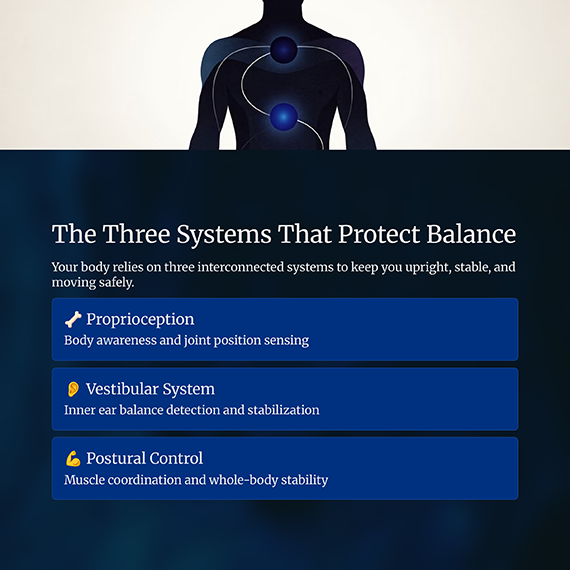
These systems operate quietly in the background, yet they play a vital role in maintaining confidence and independence in everyday life.
The good news is that they respond extremely well to training – especially when we incorporate small functional challenges into daily routines.
Lifestyle habits and healthcare work best as partners. Medical care addresses disease and injury when they occur, while lifestyle habits build the resilience that helps prevent decline and maintain quality of life.
It’s not about perfection or dramatic change. Often the most powerful approach is simply stacking small functional habits into everyday life—gradually strengthening the systems that support stability, movement, and confidence.
Over time, those signals accumulate. Strength builds. Balance improves. Movement becomes easier.
Independence, in many ways, is not a matter of luck. It’s something that can be trained, supported, and protected.
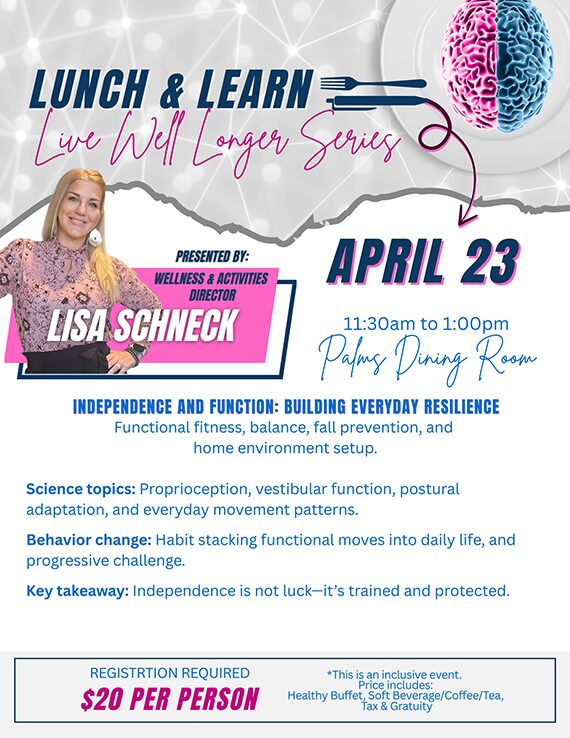
For those interested in exploring these ideas further, we will take a deeper look at the science of functional movement, balance, and everyday resilience during the April 23 Wellness event: Independence and Function: Building Everyday Resilience. Come learn how everyday movement, awareness, and habit-building can help support resilience and independence for years to come. See below flyer for details.