



Experts say that every cell in the human body tells a story – and it is a story far more dramatic than most people realize! At the center of this narrative is a tiny structure that can determine how well you age, how energetic you feel, and how resilient your body can be.
That structure is the mitochondrion, famously known as the “powerhouse of the cell.” But the real tale of how mitochondria came to exist – and what they do for your health – is better than any science fiction plot, and helps us better understand why they are so important.
A Love Story … or a Hostage Situation? The Origin of Mitochondria
A few billion years ago, early Earth was changing. Oxygen, once a toxic gas to most life forms, began filling the atmosphere. Many primitive organisms couldn’t handle this oxygen surge as it damaged their cells.
Enter a small, free-living bacterium with a superpower: it thrived on oxygen.
Nearby was a much larger, struggling cell that couldn’t tolerate oxygen at all. What happened next is one of the most important moments in evolutionary history:
The large cell that could not abide oxygen swallowed the oxygen-loving bacterium… and instead of digesting it, they formed a partnership.
The bacterium provided efficient energy using oxygen and the host cell provided protection and resources. The ancient cell is our own ancestor and the bacterium it absorbed is the ancestor of every mitochondria in our body. To this day, that little bacterium from long ago still carries many bacterial features and does not share our genome – they remain a unique but intrinsic part of our own physiology! And, the communication between the mitochondrial genome and our own nucleic genome is fundamental to our health and longevity. When dysfunction begins to convolute this communication, aging accelerates.
This partnership – called endosymbiosis – became the foundation of all complex life: animals, plants, and humans. Over time, that bacterium evolved into mitochondria. So, within each of our cells exist hundreds or even thousands of these oxygen loving mitochondria – spending every moment of everyday processing oxygen to produce energy! Understanding their origins helps us appreciate why mitochondrial health is so central to our own wellbeing today.
Why Mitochondria Matter for Your Health Today
Your mitochondria are responsible for turning the food you eat and the oxygen you breathe into ATP – your body’s usable energy.
Healthy mitochondria mean:
1. high energy
2. better metabolism
3. fast recovery
4. sharp thinking
5. lower inflammation
6. longevity and vitality
But when mitochondria struggle, the opposite occurs. Research links mitochondrial dysfunction to:
• fatigue and muscle weakness
• slow metabolism
• insulin resistance
• chronic inflammation
• neurodegenerative conditions
• accelerated aging
Today, many forces – stress, poor sleep, sugar spikes, toxins, inactivity – can overwhelm mitochondria, just like the oxygen-toxic world once overwhelmed our ancient ancestors.
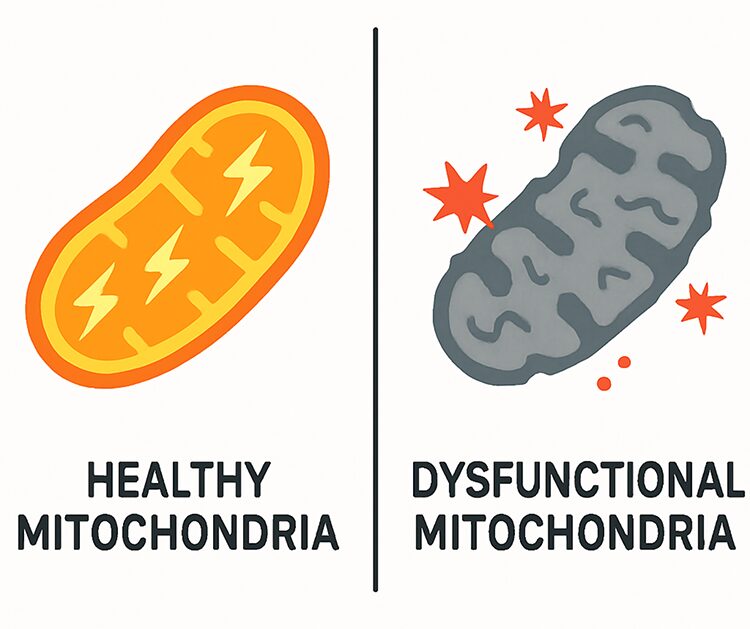
The incredible news?
You can protect, strengthen, and even increase your mitochondria.
Your daily habits determine whether they flourish or fade.
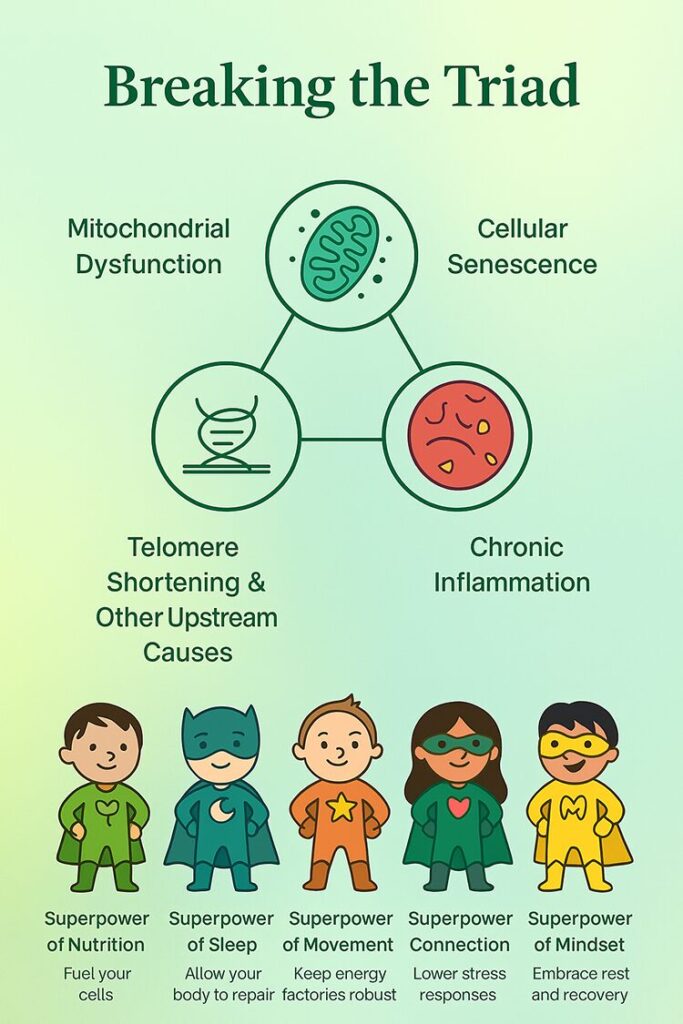
This is where our Wellness Department’s Five Wellness Superpowers come into play.
HOW YOUR FIVE WELLNESS SUPERPOWERS BOOST MITOCHONDRIA
1. Nutrition: Feed Your Powerhouses
Certain foods help mitochondria create energy efficiently, repair damage, and reduce inflammation.
Key mitochondrial nutrients include:
• protein (amino acids fuel repair and muscle, where many mitochondria live)
• omega-3 fatty acids (anti-inflammatory protection)
• B-vitamins (cofactors in energy production)
• magnesium (over 300 reactions, including ATP formation)
• polyphenols (berries, olive oil, herbs—improve mitochondrial signaling)
And perhaps the most important dietary skill of all: blood sugar regulation. When blood sugar spikes repeatedly, mitochondria become overwhelmed and damaged. Stable blood sugar means stable energy.
We’ll be exploring these topics in depth on January 22 at the Living Well Longer Series: Nutrition for Longevity Lunch and Learn in the Palms Dining Room.
2. Movement: Build More Mitochondria
Movement doesn’t just strengthen muscle – it creates more mitochondria and improves their performance.
Different types of exercise offer different benefits:
• Strength training: signals the body to build new, more efficient mitochondria.
• Aerobic exercise: increases the number and density of mitochondria.
• Interval training: supercharges mitochondrial function by improving oxygen handling.
As we age, mitochondrial decline is natural—but movement is the most powerful antidote.
3. Sleep & Rest: Mitochondrial Repair Mode
Your mitochondria repair themselves at night. Insufficient sleep means insufficient repair.
• During sleep, the body:
• clears oxidative damage
• restores ATP levels
• removes dysfunctional mitochondria
• supports brain energy metabolism
Good sleep isn’t “nice to have.” It’s a biological requirement for longevity.
4. Connection: Stress Relief at the Cellular Level
Chronic stress floods the body with cortisol, which disrupts mitochondrial energy production. Healthy relationships, laughter, community (like the one here at Heritage Palms), and emotional support reduce this load and promote resilience.
Connection literally changes your cellular chemistry.
5. Mindset: Your Internal Environment Matters
Your thoughts create physiological signals. Hope, curiosity, and positive expectation reduce systemic stress and promote mitochondrial health, while fear and chronic worry suppress energy-producing pathways.
A regulated nervous system means regulated mitochondria.
Nutrition for Longevity: January Seminar Invitation
In January, our Living Well Longer series will focus on Nutrition for Longevity:
Evidence-based strategies for healing, energy, and metabolic health.
We’ll cover:
Science Topics
• Protein needs as we age
• Anti-inflammatory foods
• Blood sugar regulation
• Micronutrient sufficiency
Behavior Change Essentials
• Simplified meal planning
• Mindful eating
• Overcoming cravings
• How to read hunger, fullness, and energy signals
The Key Takeaway
Food can drive inflammation or fight it. Knowing the difference is one of the most powerful longevity tools you have.
Our Bodies Are Amazing! Remember, you are a walking symbiosis of ancient life. Your mitochondria are the engines that make everything else possible. By nurturing them – through nutrition, movement, sleep, connection, and mindset – you don’t just add years to your life… you add high-quality life to your years.
I hope you’ll join us on January 22nd as we dive deeper into these powerful strategies for living well, living long, and staying vibrant.